

Share with:


Post Contents []
Refrigeration plays a crucial role in both domestic and commercial settings, ensuring food stays fresh and safe. But when equipping a catering kitchen, why not save money by choosing cheaper domestic models? The answer is simple: commercial kitchens require equipment designed for frequent, heavy use.
Why Buying Commercial is Essential
When equipping a professional kitchen that caters to the public, purchasing commercial equipment should be a no-brainer. Heavy use, maximum efficiency, and consistent quality results are what commercial products are designed to deliver. However, some businesses still choose domestic pieces for their commercial kitchens, which can be problematic.
Distributors frequently encounter domestic appliances in commercial kitchens they service. While not illegal, domestic appliances are not designed for the demands of a professional environment. It's like using a chocolate teapot to serve beverages or cutting a prime steak with plastic cutlery – they might perform for a short time but can't withstand long-term intensity.
Domestic equipment in commercial kitchens poses safety issues and can't handle daily heavy use. Technical engineers warn that many domestic items lack the power to heat dishes to a safe temperature or chill foods quickly enough. This can lead to unsafe food being served, which can be devastating for businesses.
Some people believe all appliances, domestic or commercial, perform the same job. While a refrigerator keeps items chilled and an oven cooks food, the performance levels differ significantly. Commercial equipment can perform tasks faster and with higher quality results. Ignorance of these differences can result in unsafe food and increased utility costs.
Cost is another factor for choosing domestic over commercial. While domestic appliances may have a lower purchase cost, commercial alternatives offer superior features, enhanced efficiency, and unrivalled safety. The higher price tag reflects these benefits, which are crucial for catering businesses.
Many people don't realise that the standard warranty for domestic appliances is void when used in a commercial setting. This leads to frustration when inevitable breakdowns occur. Insurance companies can also nullify business claims if the equipment used isn't fit for purpose. To avoid heavy financial outlay in the future, investing in commercial equipment is essential.
Commercial Refrigeration

- Frequent Access: Can handle doors being opened hundreds of times a day without performance loss.
- Size and Capacity: Offers a range of sizes to meet large stock demands. Options include cold rooms and freezer rooms for extensive storage.
- Temperature: Precision temperatures meet strict food safety standards, with specialised ranges for specific products.
- Accuracy and Precision: Thermostats provide greater precision, with easy monitoring.
- Materials and Manufacture: Built with high-grade materials for durability in tough environments.
- Efficiency: Undergo stringent testing for energy efficiency, with better insulation and environmentally friendly designs.
- Features: Includes adjustable shelves, strong baskets, locks, LED lighting, replaceable door gaskets, and more. Doesn't use door shelves.
- Power: Increased power ensures accurate conditions and consistency. Some models need hardwired connections or 3-phase supply.
- Design: Available for every application, including undercounter, upright cabinets, multidecks, and cold rooms, with solid or glass door options.
- Positioning: Designed for various placements, with climate class ratings denoting maximum ambient conditions.
Domestic Refrigeration
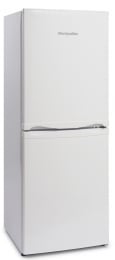
- Occasional Access: Designed for infrequent door openings, around 10-30 times a day.
- Size and Capacity: Typically a 50/50 or 70/30 fridge-freezer split, with single-use models available.
- Temperature: Suitable for general chilling and freezing, with greater fluctuations than experienced with commercial units.
- Accuracy and Precision: Less precise and less control leading to greater variations in conditions.
- Materials and Manufacture: Not as durable as commercial counterparts typically with less insulation.
- Efficiency: Energy ratings given, but less rigorous testing. Insulation and design are effective but not of commercial grade.
- Features: Includes baskets, shelves, trays, internal lighting, and adjustable feet, but less durable. Will typically include door shelves.
- Power: Runs on a standard 13A supply found in homes.
- Design: Typically tall upright fridge-freezer combinations with solid doors, available in undercounter and built-in variations.
- Positioning: Suitable for kitchens, utility rooms, garages, and outbuildings, with minimal deviation in ambient temperatures.
Choosing the right refrigeration for your business ensures efficiency, durability, and compliance with food safety standards.
Commercial Refrigeration: Essential for Any Catering, Retail & Hospitality Business
Commercial refrigeration is vital for storing or displaying perishable goods in the food and beverage industry. It ensures the safety, quality, and freshness of ingredients through precise temperature control. It can be categorised into display refrigeration with glass doors and storage refrigeration with solid doors.
The Importance of Commercial Refrigeration
- Preserving Quality and Freshness: Essential for shops, catering businesses, and food service environments, ensuring customers receive fresh products. Shops benefit from glass door display units, while commercial kitchens prefer solid door cabinets and counters.
- Compliance with Health Standards: Prevents the growth of harmful bacteria, ensuring food safety and quality.
Types of Commercial Fridges & Freezers
- Solid Door Storage and Catering Fridges & Freezers:
Most used in: Commercial Kitchens
- Upright Cabinets: Large storage capacity for bulk items. Shop Upright Commercial Fridges & Catering Freezers
- Undercounter Storage Units: Space-saving, convenient access to ingredients. Shop Undercounter Fridges & Undercounter Freezers
- Prep Counters: Combine refrigerated storage with a food-safe worktop, streamlining food preparation.
- Chefs Drawers: Great for compact footprint, accessibility and ultimate organisation. Available for either fridge or freezer functionality. Shop Commercial Drawer Fridge & Counter Freezers with Drawers
- Glass Door Fridge Displays & Display Freezer Cabinets:
Most used in: Shops & Customer Facing Settings
- Appealing Product Display: Transparent doors boost impulse purchases.
- Variety of Models: Upright and undercounter options for different needs.
- Countertop Fridges and Impulse Coolers:
Most used in: Shops & Customer Facing Settings
- Space-Saving Design: Ideal for small shops or checkout areas.
- Multidecks and Serve Overs:
Most used in: Shops & Customer Facing Settings
- Open Front for Easy Access: Multideck display fridges with clear open access are perfect for self-service environments.
- Customisation Options: Tailor equipment to create deli display fridges, butchers serve over counters and fish display counters, plus other layouts for similar retail settings.
Choosing the Right Commercial Fridge & Freezer
Selecting the right type, size, and capacity is crucial for efficiency and effectiveness. Modern commercial refrigeration focuses on energy efficiency, reducing operational costs. For advice and top tips on choosing the right equipment check out our buying guides that talk you through what to look out for with each type of equipment.
Commercial fridges and freezers, whether for catering kitchens, shops, or other food service settings, are indispensable for maintaining food safety, enhancing business operations, and ensuring customer satisfaction. Each type has unique characteristics and benefits, so businesses should carefully consider their specific requirements to choose the most suitable solution.


Leave a Comment
Your email address will not be published. Required fields are marked *