

Share with:


Post Contents []
- Wine Basics
- A Long & Full Flavoured History
- Correct Wine Storage
- Temperature and humidity
- Wine types and recommended storage temperatures
- Gradient
- Brightness
- Rules for Wine Storage (unopened)
- Tips for Wine Storage (opened)
- Wine types and recommended storage temperatures
- Top 5 Tips for Businesses Dedicated to Wine Lovers
Wine is a massive seller in any business and so it’s vital to be fully prepared; understanding the basic principles for successfully storing and serving wine.
Wine is a delicate thing and any fluctuation in storage environments could mean that a good selection of reds, whites, roses and sparkling wines is compromised. Getting it right is essential to ensure wine success. Whatever the customers wine penchant, it’s vital to understand and implement correct storage and service to make sure guests get the quality they’re looking for.
Wine Basics
Everyone knows that, in the broadest terms, wines can be categorised into whites, reds, roses and sparkling. These umbrella terms are separated further, for example full, light or medium bodied and sweet or dry. Within these sections, wines can then be pinpointed to the variety of grape used, each having their own characteristics and flavour profiles.
It is a common misconception that the colour of the wine is dependent on the colour of the grape used. This is not the case. Some white wines are actually made from red grapes and red wines with white grapes. The deciding factor for the final colour is, in fact, whether the skin is left on the grape or not.
White wines such as Pinot Grigio, Sauvignon Blanc, Chardonnay and Reisling are created using grapes with no skin. Red wines including Merlot, Shiraz, Pinot Noir, Syrah and Cabernet Sauvignon are fermented with the skins. Roses such as Grenache, Sangiovese, White Zinfandel and White Merlot use some grape skin but not enough to make it red. Sparkling wines including Champagne, Prosecco and Cava are fermented using skinless grapes however will undergo a secondary fermentation to create the signature bubbles.
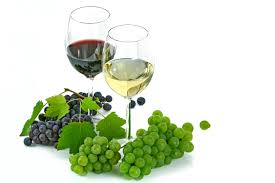
Grapes will thrive and prosper in different environmental conditions, therefore, certain varieties will grow better in certain countries. Each type and origin of grape will account for the nuances in taste, aroma, texture and body. This is why some wine lovers will prefer an Italian wine to a French wine or a South African bottle to a bottle from New Zealand. Understanding and appreciating the different characteristics and how they can complement and influence tastes and flavours will ultimately facilitate successful food pairings.
A Long & Full Flavoured History
Wine seems to be as old as the very first stories and documents, with the Bible, Greek mythology, Egyptian cermonies and Persian legends all referring to it. Wine has been present in countries around the world for millenia, with the oldest evidence dating back to 6000 BC where traces of fermented grape wine have been found. Each country had their variations with ingredients prominent in their culture.
With many civilisations producing wine in some form albeit on a small scale, it was monks that became one of the largest producers of wine to ensure a continuous supply for their Catholic Mass. Wine then became a drink that could be enjoyed outside of religious ceremonies or rituals, although initially only by the noble upper classes that could afford it. The story continued with the drink becoming available to all classes and eventually with different grape varieties and ageing processes introduced for more nuanced flavours.
The roots of Champagne, however, are much more recent. The Romans were the first to plant vineyards in the Champagne region of north east France which produced a pale wine with a tinge of pinkness to it. It was made from a Pinot Noir grape and was known as vins de Reims; very different to the sparkling wine which we see today.
Envious of their neighbours in Burgundy who could produce red wine of great quality, the Champenois repeatedly tried to equal this quality however were impeded by the climate. Grapes never fully ripened during the colder months, halting the fermentation process, resulting in lighter more acidic results. When spring arrived residual sugar and the yeast would reactivate and continue fermenting releasing carbon dioxide and resulting in the fizz that Champagne is renowned for. For years the French, notably a Benedictine monk called Dom Perignon, tried to eliminate these bubbles, however the British were actually embracing the bubbly wine and eventually it became the delicacy that it is seen as today.
Correct Wine Storage
Wine is a complex thing; whilst not everyone wants to reach master sommelier status, they do need to arm themselves with enough knowledge to determine what makes wine good or bad. Bar staff may not need to know all of the intricacies but it is essential to understand how the correct storage conditions can get the most out of a wine menu.
White wine should generally be consumed within a two year time period from the date of production to gain the best results. The exception to this rule is in the case of certain Chardonnays that can be aged up to 20 years. Red wines will develop over time and the flavours and aromas will be enhanced as they age. There are certain elements with regard to storage conditions of wine which must be considered to ensure that you only serve wine that is in tip top condition.
All wine can be stored together in the same conditions whether red or white. Each type, however, will require different temperatures shortly prior to service in order to achieve perfect results and maintain optimum freshness. The storage conditions will impact taste, texture, aroma and freshness; things that you don’t have to be an expert to appreciate.
If unopened and stored in correct conditions, wines will generally last up to 3 years however this is dependent on the type of grape used during the fermentation process; some getting better the longer they are left to age and mature.
Whether a bottle has been opened or not will influence recommended storage conditions. Once wine is unsealed chemical reactions can occur as air gets into the bottle.
This reaction is called oxidation. Whilst thought to initially enhance the characteristics of certain wines it can quickly take a turn for the worse and ruin the entire bottle, altering and detracting from the delicate flavour and aroma. As wine is poured there is more space in the bottle for oxygen meaning the possibility for oxidation is increased.
Top Tip: Try decanting wine into a smaller receptacle to reduce the amount of oxygen in the bottle and seal appropriately.
Chilling opened wine will slow down this chemical reaction and increase shelf life, vital for maximising profits. Chilling is recommended for all wine. If correctly stored and adequately sealed with a cork or stopper red, white or rose wines, once open, could last up to 5-7 days depending on type. Sparkling wines, however, will lose carbonation and ‘go flat’ once unsealed so will have a shorter lifespan; a bottle of bubbles with no bubble won’t go down well.
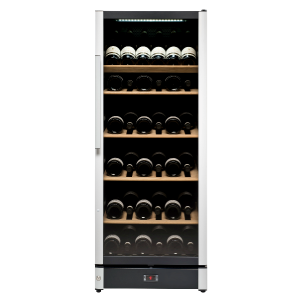
Investing in a suitable commercial wine fridge will guarantee that precision conditions are easy to achieve and more importantly, maintain. Available as compact undercounter units, tall uprights for businesses that need extra storage and dual temperature models to account for reds and whites, roses and sparkling, the best model for any business requirement can be found.
Read our Wine Cooler Buying Guide for more detailed information about choosing the right wine fridge for your business.
Temperature and humidity
Many bars may simply store their wine selection in a wine cellar whether it is red or white and then transfer bottles to the appropriate temperature storage just before it is required. This may be the easy option and the cheapest however ideally wines should be stored at the temperature recommended for serving. This means that you may need multiple coolers and wine refrigerators to guarantee that all of your wines are kept in the ideal storage conditions. The humidity of the storage environment will also be detrimental to the quality of the wine once it is opened.
Wine corks can dry out allowing air to enter the bottle and mix with the wine inside unless the storage conditions are kept relatively high in humidity, approximately 70%. Certain wine coolers will have controls to dictate not only the temperature of the storage area but also the humidity meaning that you are in control of the ideal storage conditions.
Wine types and recommended storage temperatures
| Type of Wine | Storage Temperature |
| Sparkling wines; Prosecco, Champagne etc. | 7.2˚C/45˚F - 15.5˚C/60˚F |
| Dry white wines; Reisling, Pinot Gris etc. | 7.7˚C/46˚F - 10˚C/50˚F |
| Rose and sweet wines; Rose, Moscato etc. | 10˚C/50˚F - 12.2˚C/54˚F |
| Red wines, young with low acid; Merlot, Malbec etc. | 8.8˚C/48˚F - 10˚C/50˚F |
| Red wines, structured; Shiraz, Cabernet Sauvignon etc. | 15˚C/59˚F - 17.2˚C/63˚F |
| Red wines, aged or dry; Pinot Noir | 15.5˚C/60˚F - 17.7˚C/64˚F |
| Red wines, fine aged; Pinot Noir | Storage temperature; 17.7˚C/64˚F |
Gradient
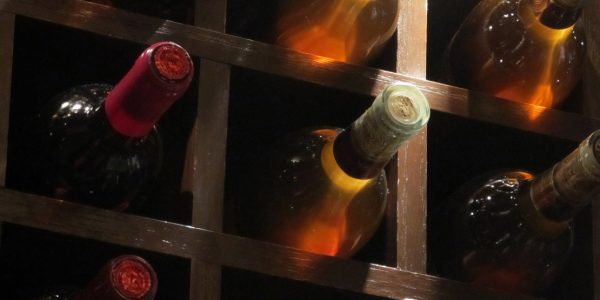
All wines should be stored on their sides rather than in an upright position. This horizontal position ensures that the corks do not dry out therefore allowing air into the bottle to oxidise the wine. Oxidisation will spoil the wine if left for a long period of time. Although wines should be stored on their side it is often recommended to allow the bottle to rest for a short period in an upright position just before serving. This allows any sediment present in the bottle to settle to the bottom and not be transferred to the glass.
Brightness
All wines should be kept out of sunlight whilst in storage as the UV rays can spoil the wine. Some bottles are made from darkened glass in an attempt to keep out the light however this does not prevent all light from seeping through. It is recommended to keep wines in total darkness however when this is not a viable option you can store the wine sealed in a box or crate or tightly wrapped in a cloth.
Rules for Wine Storage (unopened)
Keep It Cool and Consistent
All unopened wine should be stored in consistent cool temperatures, generally advised somewhere around 12°C. Bottles can then be transferred to a wine cooler, the temperatures adjusted accordingly just prior to service, either chilling further or allowing to acclimatise depending on the type of wine.
Humidity is Key
Wine bottles need humidity, typically around the 70% mark, as it prevents corks from drying out. Unlike standard commercial refrigeration that only controls temperature, wine chillers also accurately control humidity to achieve an optimum storage environment.
Keep Away from Direct Light
Ever wondered why wine cellars are dark or wine bottles are made of dark glass? During storage, wine doesn’t like light as it can accelerate the ageing process. Gloomy cellars and darkened glass have their purpose, aiming to block out as much light as possible. This aversion to the light also explains why bottles are often stored in crates or boxes or even wrapped in cloth. Light can also be a source of heat, gently altering temperatures; even though only slight this could be enough to have an effect on the end result.
Lay it Down
Storing bottles on their side distributes the wine so that it is always in contact with the cork. This prevents the cork from drying out and potentially letting air into the bottle where oxidation can occur. Bottles should be rested for a short period prior to service in an upright position to allow sediment to settle. Arguably screw tops don’t need to lie down during storage as there is no cork to keep moist.
Minimise Disruption
Once bottles are in position try not to move wine unnecessarily. The repeated movement of bottles, even vibrations from surrounding equipment can have an impact on the end result. Agitation could cause premature ageing, disturbing the sediment and potentially affecting the flavour and aroma.
Tips for Wine Storage (opened)
Keep it Stoppered
Once a bottle is opened it is inevitable that oxygen will have contact with the wine however a well-fitted stopper can keep as much out as possible, slowing down oxidation and keeping wine fresher for longer.
Keep it Cool
All opened wine should be kept refrigerated, slowing down the chemical reactions and oxidation that can ruin wine. Red wine could be seen as an exception. It is served at a higher temperature to whites and roses, meaning that keeping it in the chiller isn’t viable. The correct serving temperature needs to be maintained during opening hours when it might be needed, only being refrigerated overnight if necessary. The bottle can then be brought back up to the correct serving temperature in the morning.
Keep it Separate
Never store wine, opened or unopened, with pungent foods such as garlic, onions or spices. The strong flavours and smells can penetrate through the cork, infusing and tainting wine with alien tastes and odours.
Wine types and recommended storage temperatures
| Type of Wine | Recommended Serving Temperature |
| Whites and Roses | 8°C – 15°C |
| Reds | 12°C – 19°C |
| Sparkling | 8°C – 10°C |
Top 5 Tips for Businesses Dedicated to Wine Lovers
We are fast becoming a nation of wine drinkers: while wine sales have risen by 60% in the last ten years, the UK has become the second largest importer of wines in Europe. It’s a trend which seems to be here to stay – with more and more of us opting for the grape over the grain.
Many drinks-sellers have already sought to follow the trend, branching out into selling wines or bringing more variety to their current bottle-offerings, all in the hopes of drawing ever more punters through their doors and persuading them to swap pints for glasses of red or white.
If you’re looking to join those trendy businesses, and capitalise on the changing tastes of your customers, here are five top tips to get you started, and get your business dedicated to the love of wine.
Know Your Market
Customers will always expect the core selection of reds, whites and roses, however why not introduce something a little different? Do a bit of market research and try out a selection of wines that could go on a weekly special. This is a great way to support local wine makers or introduce customers to something new.
Cater for all budgets
Everyone likes to splash out once in a while so stocking some bottles of fizz will, of course, be a good idea – with some premium quality for those extra-special occasions. But bear in mind that not everyone can afford a bottle of the best every week.
As you tailor your price range, keep in mind that it will need to be inclusive – offering something to every one of your potential customers. Perhaps you’ll have a greater range of under £10 bottles to cater to local students’ sophisticated pre-drinks and perhaps you’ll need a range catering to the older generation– those with refined tastes who are willing to spend a little extra on finer flavours. The details will largely be down to the kind of people who you’ll be targeting – but, as long as you’re catering to a wide range of budgets, you’ll be on the right track.
Learn the basics of wine pairing
If you’re looking to give your wine business a boost, there’s nothing like coming up with a few innovative foods and wine pairings. Showing that you know how best to enjoy your own wines can be a great way to impress your customers, get them enthused with the ways of wine and get them coming right back through your doors on a regular basis.
- Full bodied wines complement heavy, rich foods
- Intensity of flavour between food and wine should be equally matched e.g. full flavoured
- Sauvignon Blanc will compliment flavourful asparagus
- Consider the fruity notes of the wine e.g. flavours in Pinot Noir will enhance duck in a similar way that a fruit sauce would
- High acidity wines will cut through the greasiness of fatty meats achieving a perfect balance
- Textured, chewy foods such as fatty duck should be paired with wines that have high tannin levels
- Salty foods should not be served with tannic wines
- Wines should have a greater sweetness than the food

Keep on Learning - Do’s and Don’ts for Serving Wine

DO: Rotate the bottle at the end of pouring to prevent dripping.

DON’T: Serve wine from a leaking bottle. This could mean that the cork isn’t effectively sealing, allowing air to get in causing potential oxidation.
DO: Inspect bottles and wine before serving to the customer.
DON’T: Serve wine that is cloudy or appears to have bubbles (when it isn’t sparkling). This could be a sign of re-fermentation that will affect the quality of the final product.
DO: Pour the wine up to the curve of the glass.
DON’T: Serve wine that tastes ‘off’. This could potentially signal that oxidation has occurred.
Invest in the Right Equipment
Wine coolers are critical to keep your white wines and your rose’s chilled. Essentially a wine cooler is a piece of refrigeration equipment that has been specially designed for holding bottles of wine.
A good supply of bottle stoppers, corkscrews, glass racks and a correct range of white wine glasses, red wine glasses and Champagne glasses are also vital.
Hone the basics of wine storage and serving and make sure that your wine is always in optimal condition.


Leave a Comment
Your email address will not be published. Required fields are marked *