Shop 2 stores as 1 | Shared Search, Account & Cart

Checkout using your account
Checkout as a new customer
Creating an account has many benefits:
- See order and shipping status
- Track order history
- Check out faster
Catering Freezers
Commercial catering freezers keep perishable goods well preserved and at peak freshness for longer in busy professional environments. With commercial freezers for food storage offered by leading brands including Adande, Foster and True you are assured quality manufacturing, precision performance and enhanced efficiency.
Need help selecting the ideal equipment?
-
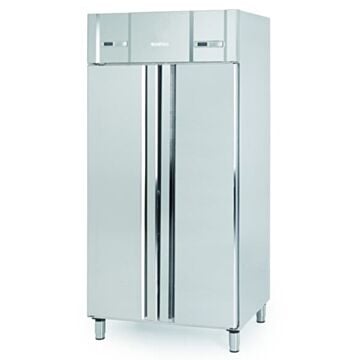
- Defrost Type Automatic
- Finish Stainless Steel
- Footing Legs
- Light LED
- Litres Capacity (Gross) 650 Show More
Special Price £4,452.80 £3,710.67 Regular Price £6,968.40 £5,807.00Lease from £16.69 per weekMinimum order value £1000 ex VAT
Commonly Asked Questions About Commercial Storage & Catering Freezers
Q. What is the difference between a commercial freezer and a regular freezer?
A. Commercial solid door freezers are much larger than domestic models to facilitate the greater quantities of stock that need to be stored. They are manufactured using commercial grade materials for added durability to withstand the tough conditions of a professional kitchen. Solid door freezers also have better insulation and are more powerful in order to achieve the consistent low temperatures necessary for food safety. As doors are repeatedly opened and closed during busy services, temperatures fluctuate regularly so equipment has to be able to work harder to guarantee optimum frozen conditions for food safety in commercial premises.
Q. Why are commercial freezers so expensive?
A. Restaurant freezers are built for heavy duty use, large capacity holding of stock and longevity. Manufactured with high quality materials, advanced components and generally 'more' in terms of size and technology than domestic freezers, the costs are also obviously more. Catering and restaurant freezers deliver consistency and precision where food safety is most critical. While all professional freezers will cost more than domestic appliances, there are options to suit all budgets, from entry level equipment to premium models. There are payment options available to help spread the cost of equipment including iwoca Pay in 3 and commercial leasing for commercial refrigeration to guarantee that every business can get the right equipment for them.
Q. How long can you store food in a commercial catering freezer?
A. All stock should be frozen to temperatures below -18C. As freezing prevents the growth of bacteria, produce can technically be stored indefinitely however to retain quality and freshness of produce once thawed and cooked, food should be stored no longer than 3 months as a general guideline. Meats, when properly wrapped and protected can generally be stored for approximately 3-6 months. It is vital to ensure the correct containers are used to hold, wrap and protect produce, in order to prevent freezer burn.
Q. Do commercial freezers use more electricity?
A. Commercial catering freezers will use more electricity and prove more costly to run than commercial fridges as they have to work harder to reach and maintain lower temperatures. All commercial refrigeration will cost more to run than domestic models as they are more powerful and generally larger.
Q. Should I fill my catering freezer?
A. Filling a freezer cabinet can aid efficiency when it is filled to load lines only, as the frozen stock helps to maintain sub-zero temperatures.Overfilling undercounter and upright freezers will also restrict airflow which can restrict distribution of cold air. Correctly filling your commercial storage freezer, as advised in equipment manuals, gives optimal results in energy efficiency, general performance and longevity.
Q. Is a commercial upright freezer better than a commercial chest freezer?
A. This depends on the factors you are classing as 'better'. Both are ideal for their own specific function, whether that's easy access and organisation, or space for bulky frozen items and efficiency. Upright freezers are great for access, the contents can be located and retrieved easily. Commercial chest freezers are more efficient as the chest creates a well where the cold air sinks into even when the lid is open, however can prove more difficult to retrieve stock from, especially when it's towards the bottom of the unit.
Q. Do I have to put frozen foods in my freezer?
A. Restaurant freezers, both standard models, more heavy duty gastronorm freezers, undercounter units and freezer drawers, should only be loaded with frozen or pre-chilled stock. They are not designed to pull down the core temperatures of ambient or hot produce. If you require equipment to perform this task safely, you will need a blast chiller or blast freezer.
Q. Why does my upright storage freezer keep icing up?
A. Ice build up in a catering freezer, as with a glass door freezer for display, is typically due to moisture or a rise in temperature. In commercial storage freezers this will typically be due to damaged seals, or the door not shut being shut properly. Regular cleaning and maintenance to spot any early signs of perished seals and securely shutting doors is essential to prevent any excess ice.
Q. How long will food stay frozen if my restaurant freezer fails?
A. If your freezer is full at the time of failure and you keep doors closed, then contents should remain frozen for up to 48 hours depending on the size of your unit. Always inspect produce when power is returned to ensure that it still safe for consumption in line with food safety guidelines and regulations.
Q. How long should a commercial storage freezer last?
A. The expected lifespan of a commercial freezer depends on a number of factors. The quality and durability of the equipment, how the unit is used, where it is used and how well it is cleaned, maintained and serviced throughout it's lifetime. Generally, if freezers are looked after, serviced regularly, used correctly and from a quality manufacturer they can last anywhere from 10 to 15+ years.
Q. Do commercial freezers use more electricity than commercial fridges?
A. Yes. Compressors and condensers have to work harder in freezer units to achieve lower minus temperatures and so will use more energy to achieve this.
Q. Can I recycle my restaurant freezer?
A. As commercial refrigeration contain potentially harmful gases it is essential that they are disposed of correctly and responsibly - not to mention that recycling such large pieces of equipment can pose logistical issues. Many manufacturers offer a recycle service for an additional charge. This means that gases can be drained and disposed of according to guidelines and the cabinet itself is correctly dealt with.